
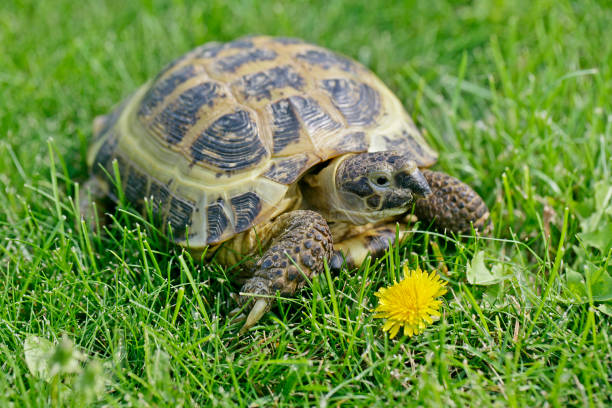
Russian tortoises need a high fiber, plant based diet to stay healthy. In the wild, they mainly eat grasses, weeds, leafy plants, and other rough vegetation. Their digestive system is designed for low protein, high fiber foods rather than rich commercial diets or fruit heavy feeding.
A proper diet is one of the most important parts of long term tortoise care.
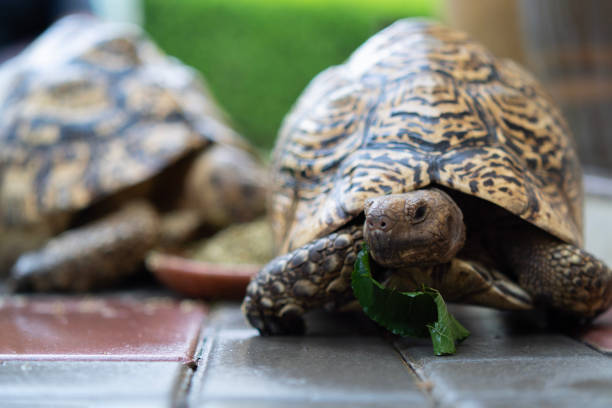
What Russian Tortoises Eat
A healthy Russian tortoise diet usually includes:
- Leafy greens
- Grasses
- Weeds
- Edible flowers
- High fiber vegetables
The goal is to mimic the type of rough plant material they would naturally eat in dry environments.
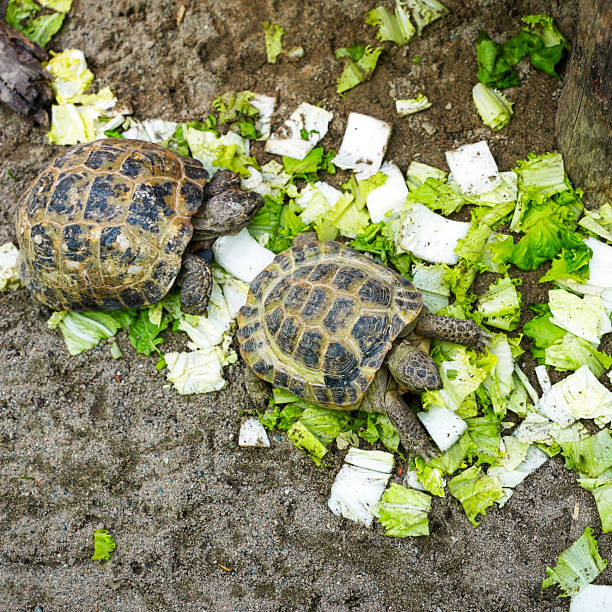
Best Greens for Russian Tortoises
Leafy greens should make up most of the diet.
Good choices include:
- Dandelion greens
- Collard greens
- Mustard greens
- Turnip greens
- Endive
- Escarole
These greens provide fiber, vitamins, and calcium.
Safe Vegetables
Vegetables can be added in moderation for variety.
Safe options may include:
- Squash
- Bell peppers
- Cactus pads
- Zucchini
Vegetables should support the diet, not replace leafy greens completely.
Grasses and Hay
Russian tortoises benefit from rough fiber sources.
Many owners offer:
- Orchard grass
- Timothy hay
- Tortoise safe grazing plants
Some tortoises ignore dry hay at first, but mixing it with greens may help.
Flowers Tortoises Can Eat
Certain edible flowers are safe and often enjoyed by tortoises.
Examples include:
- Hibiscus
- Dandelion flowers
- Nasturtiums
- Rose petals
Flowers should be pesticide free.
Foods to Avoid
Some foods can cause serious health problems for tortoises.
Avoid feeding:
- Dog or cat food
- Dairy products
- Meat
- Bread
- Processed foods
- Large amounts of fruit
Too much protein can damage kidneys and affect shell growth.
Why Fruit Should Be Limited
Russian tortoises are not naturally heavy fruit eaters.
Too much fruit may lead to:
- Digestive upset
- Diarrhea
- Imbalance in gut bacteria
Small occasional amounts are usually enough if fruit is offered at all.
Calcium and UVB Lighting
Diet alone is not enough for shell health.
Russian tortoises also need:
- Calcium supplementation
- Proper UVB lighting
- Access to sunlight when possible
Without these, they can develop metabolic bone disease and shell problems.
Commercial Tortoise Food
Some commercial tortoise diets are available, but they should not replace fresh foods entirely.
Pellets may work best as:
- Occasional supplements
- Emergency backup food
- Part of a mixed diet
Fresh greens are still the foundation of healthy feeding.
Hydration Matters Too
Even desert tortoises need regular hydration.
Fresh water should always be available, and occasional soaking may help maintain hydration and healthy digestion.
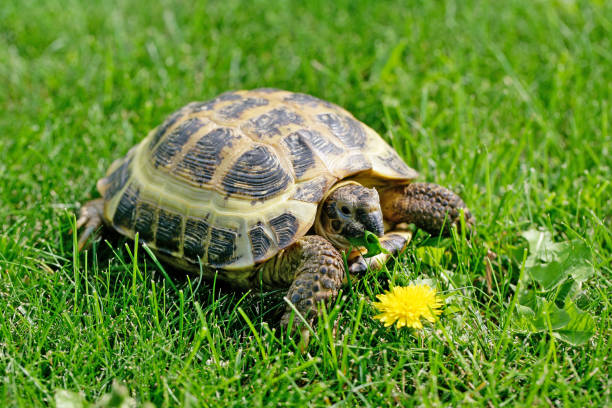
Signs of a Poor Diet
Diet related problems can develop slowly.
Warning signs may include:
- Soft shell
- Uneven shell growth
- Low energy
- Poor appetite
- Digestive issues
Long term nutrition problems are often harder to reverse later.
Final Thoughts
Feeding a Russian tortoise properly means focusing on leafy greens, fiber, calcium, and natural plant based foods. Their diet should stay simple, high in roughage, and low in sugar and protein.
A balanced feeding routine combined with proper lighting and hydration gives Russian tortoises the best chance for a long, healthy life.